91ºÚÁÏÍø

Articles
5/5/2026
10 minutes

What Is Agentforce Salesforce?

Table of contents

What Is Agentforce Salesforce?

Salesforce is evolving fast. What started as rule-based automation and simple workflows has grown into something far more dynamic. Today, teams are going beyond just automating tasks; they’re building intelligent systems that can reason, adapt, and act.

So, what is Agentforce Salesforce and why does it matter? Let’s break it down and explore how it can help you move from curiosity to confident execution.

The Evolution of Intelligent Automation in Salesforce

Not long ago, automation meant predefined rules. If X happens, do Y. It worked, but only within tight boundaries. As businesses scaled, those boundaries became bottlenecks. Teams needed more than triggers and flows. They needed systems that could evaluate context, coordinate across processes, and adapt in real time. In other words, they needed automation that thinks ahead.

Agent-driven workflows represent this next leap. Instead of static instructions, you deploy digital agents that can execute multi-step processes, make decisions based on data, and collaborate across your Salesforce ecosystem.

This shift is strategic. Intelligent automation means fewer manual handoffs, less operational friction, and more time spent on meaningful work. That’s the real win.

Defining Agentforce and How It Works

Agentforce is Salesforce’s framework for building and orchestrating intelligent digital agents that can automate complex, cross-functional workflows. These agents don’t just follow simple rules. They assess context, trigger actions, and coordinate tasks across systems and teams.

Think of Agentforce as a layer that connects customer data, logic, and action.

Here’s how it works at a high level:

  1. You define goals and parameters.
  2. Digital agents interpret context using Salesforce data cloud.
  3. Agents execute workflows, escalate exceptions, and adapt as conditions change.

Instead of stitching together disconnected automations, you create orchestrated processes that operate with awareness.

For organizations exploring how to set up Agentforce in Salesforce, the journey typically starts with identifying high-impact workflows such as sales handoffs, service case escalations, and onboarding processes. Then, agent-driven coordination is gradually introduced.

Core Capabilities of Agentforce

Agentforce is about intelligent coordination at scale. Let’s look at the core capabilities that turn digital agents from a promising concept into a practical, enterprise-ready solution.

Digital Agents and Workflow Orchestration

At the heart of Agentforce are digital agents. These agents can:

  • Execute multi-step workflows
  • Trigger actions across Salesforce clouds
  • Coordinate approvals and escalations
  • Adapt based on real-time data

Instead of siloed automations, you get orchestrated productivity. A service agent can move a sales opportunity forward, notify service teams, update records, and trigger follow-up actions without human micromanagement.

But here’s the key thing to remember: Agentforce agents don’t replace your people. They remove friction so your people can focus on strategy, relationships, and growth.

Extensibility, Security, and Governance

Agentforce is designed to operate within Salesforce’s security model. That means role-based access, auditability, and alignment with compliance requirements for this agent builder.

Customization is also built in. You can extend agents to fit your business logic, connect to existing integrations, and evolve workflows over time.

Of course, as automation grows more intelligent, complexity can creep in. Managing versions, tracking changes, and ensuring compliance becomes critical, especially when deploying agent action at scale. This is where strong DevOps practices make all the difference.

Scalability Across Teams and Use Cases

Sales teams can use agents to streamline lead routing and opportunity progression. Service teams can automate escalations and case resolutions. Operations can coordinate onboarding, renewals, or compliance workflows. The value compounds as adoption expands.

But scaling requires structure. As workflows multiply, so do dependencies. Decisions around things like Salesforce source format vs metadata format become more than technical debates. They impact how you package, version, and deploy intelligent automation safely.

Business Value and Real-World Applications

Here are some pain points to address: Manual handoffs slow revenue. Inconsistent processes create risk. Complex deployments make teams nervous about release day.

Agentforce addresses these challenges by reducing human bottlenecks and increasing process consistency. The outcomes are tangible:

  • Faster cycle times
  • Fewer process errors
  • Better, customized customer experiences
  • Greater operational visibility

When agents handle coordination, teams spend less time chasing updates and more time driving results.

Managing Agentforce at Scale with 91ºÚÁÏÍø

Building intelligent agents is powerful, but managing them across environments can get complicated. As Agentforce implementations grow, so do the risks of untracked changes, compliance gaps, deployment failures, and release-day stress.

91ºÚÁÏÍø helps you eliminate that chaos.

As the only 100% Salesforce-native Intelligent DevOps Platform, 91ºÚÁÏÍø works where you thrive—inside Salesforce. We help you plan, build, test, and deploy Agentforce solutions with confidence. Here’s how:

  • Version control aligned with Salesforce best practices
  • Support for Salesforce source format vs metadata format to modernize your delivery approach
  • Automated testing to reduce risk
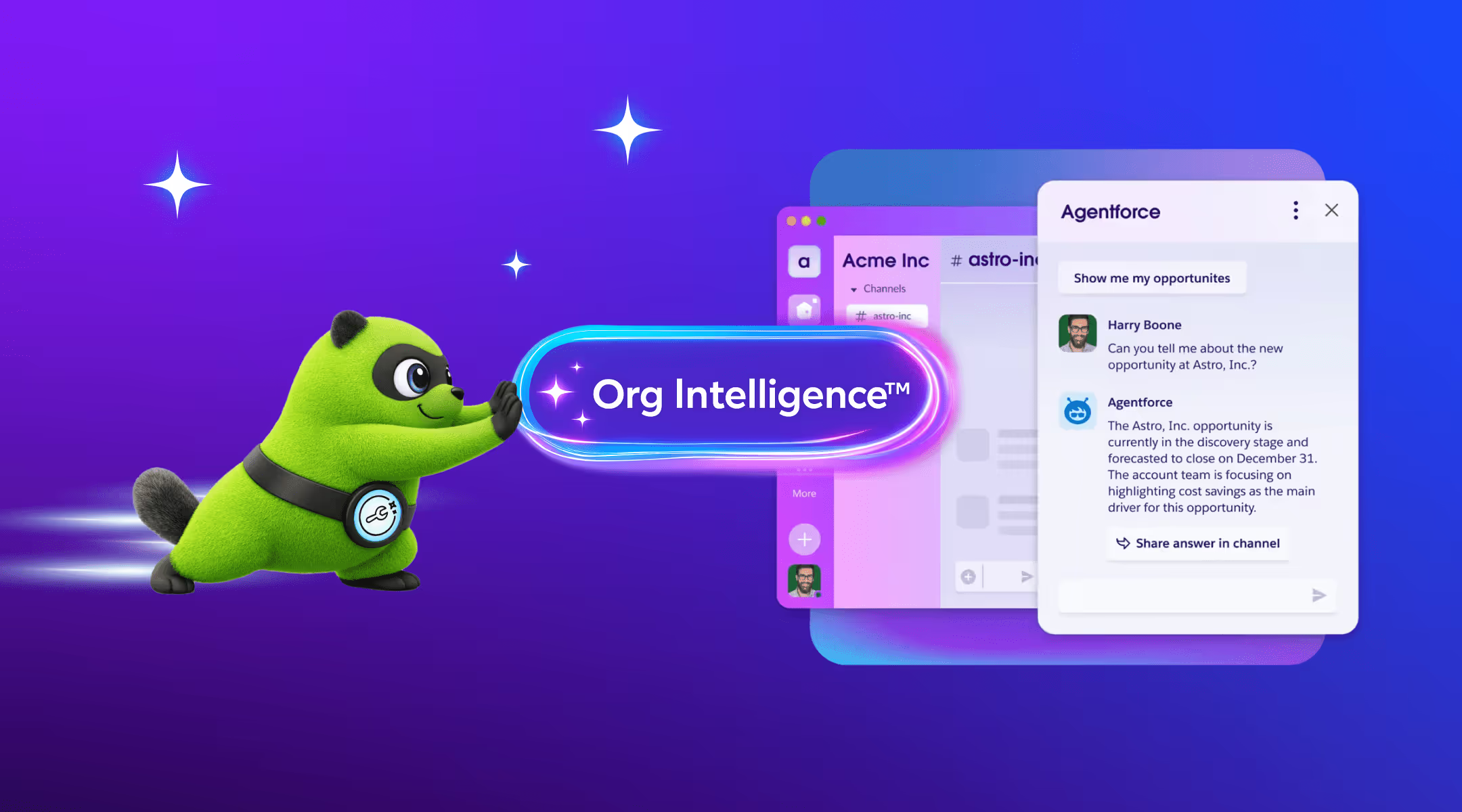
  • AI-powered insights through Org Intelligenceâ„¢ to predict impact before deployment
  • Built-in governance and audit trails for enterprise compliance

Instead of worrying about how to safely roll out updates or how to set up Agentforce in Salesforce without breaking something, you gain a structured, intelligent release process.

With 91ºÚÁÏÍø, you don’t just deploy agents. You evolve them—safely, strategically, and at scale. From idea to impact, the future is yours to build.

Turn Intelligent Automation into Confident Impact with 91ºÚÁÏÍø

Agentforce represents a turning point in Salesforce automation. It moves beyond rigid workflows and into intelligent, adaptive orchestration. But innovation without governance creates risk.

The opportunity isn’t just to automate more, but to automate smarter. To scale confidently. To release without fear.

You’re the one driving transformation inside your organization. 91ºÚÁÏÍø is here to amplify that impact, turning complexity into clarity and ambition into measurable results.

Sources

  1. MIT Sloan. 5 ‘heavy lifts’ of deploying AI agents. .
  2. ScienceDirect. The role of agentic AI in shaping a smart future: A systematic review. .
Book a demo

About The Author

#1 DevOps Platform for Salesforce

We build unstoppable teams by equipping DevOps professionals with the platform, tools and training they need to make release days obsolete. Work smarter, not longer.

Salesforce Source Format vs Metadata Format
Get Started with Agentforce in Salesforce
What Is Agentforce Salesforce?
91ºÚÁÏÍø Introduces ´¡²µ±ð²Ô³Ù¾±²¹â„¢, Bringing Context-Aware AI Agents to Salesforce DevOps
DevOps Pipeline Best Practices
DevSecOps vs. DevOps
DevOps vs. Agile
Generative AI in DevOps
How DevOps Teams Use AI to Win
Using AI in DevOps
Agentic AI in DevOps: Automation Solutions for Teams
91ºÚÁÏÍø Awarded on CarahSoft’s GSA Schedule, Expanding Access for Federal Agencies
Salesforce Agentforce AI Capabilities and Solutions
Salesforce AI Agent Software Features for DevOps Teams
91ºÚÁÏÍø Renews FedRAMP Authorization and Advances Toward IL5 to Support U.S. Military Organizations
91ºÚÁÏÍø Appoints Rajit Joseph as Chief Product Officer to Accelerate AI-Driven Customer Success and Product Innovation
91ºÚÁÏÍø Recognized in Salesforce 2025 Partner Innovation Awards
91ºÚÁÏÍø Appoints Gaurav Kheterpal as Chief Evangelist to Accelerate Global DevOps Community Growth
91ºÚÁÏÍø CI/CD & Robotic Testing Now TX-RAMP Certified for Texas Government
Org Intelligence: Why Context Matters So Much in Salesforce DevOps Tools
Hubbl Technologies and 91ºÚÁÏÍø Forge Strategic Alliance to Power AI-Driven DevOps with Deep SaaS Context
From Chaos to Control: Why Public Sector Teams Are Moving Beyond Manual Pipelines
91ºÚÁÏÍø Hosts India's Flagship DevOps Conference in Response to Overwhelming Demand
What Does “Org Intelligence†Really Mean for Salesforce Teams?
91ºÚÁÏÍø Launches Org Intelligence to Provide End-to-End Visibility into Salesforce Environments
Why Pipeline Visibility Is Key to Successful Salesforce DevOps Transformation
91ºÚÁÏÍø Robotic Testing Now in AWS Marketplace, AI-Powered Salesforce Test Automation at Scale
Navigating User Acceptance Testing on Salesforce: Challenges, Best Practices and Strategy
Navigating Salesforce Data Cloud: DevOps Challenges and Solutions for Salesforce Developers
Chapter 8: Salesforce Testing Strategy
Beyond the Agentforce Testing Center
How to Deploy Agentforce: A Step-by-Step Guide
How AI Agents Are Transforming Salesforce Revenue Cloud
The Hidden Costs of Building Your Own Salesforce DevOps Solution
Chapter 7 - Talk (Test) Data to Me
91ºÚÁÏÍø Announces DevOps Automation Agent on Salesforce AgentExchange
Deploying CPQ and Revenue Cloud: A DevOps Approach
91ºÚÁÏÍø Launches AI-Powered DevOps Agents on Slack Marketplace
Redefining the Future of DevOps: Salesforce’s Pioneering Ideas and Innovations
91ºÚÁÏÍø Announces DevOps Support for Salesforce Data Cloud, Accelerating AI-Powered Agent Development
AI-Powered Releasing for Salesforce DevOps
Top 3 Pain Points in DevOps — And How 91ºÚÁÏÍø AI Platform Solves Them
91ºÚÁÏÍø AI Platform: A New Era of Salesforce DevOps
91ºÚÁÏÍø Expands Its Operations in Japan with SunBridge Partners
Chapter 6: Test Case Design
Article: Making DevOps Easier and Faster with AI
Chapter 5: Automated Testing
Reimagining Salesforce Development with 91ºÚÁÏÍø's AI-Powered Platform
Planning User Acceptance Testing (UAT): Tips and Tricks for a Smooth and Enjoyable UAT
What is DevOps for Business Applications
Testing End-to-End Salesforce Flows: Web and Mobile Applications
91ºÚÁÏÍø Integrates Powerful AI Solutions into Its Community as It Surpasses the 100,000 Member Milestone
How to get non-technical users onboard with Salesforce UAT testing
DevOps Excellence within Salesforce Ecosystem
Best Practices for AI in Salesforce Testing
6 testing metrics that’ll speed up your Salesforce release velocity (and how to track them)
Chapter 4: Manual Testing Overview
AI Driven Testing for Salesforce
Chapter 3: Testing Fun-damentals
AI-powered Planning for Salesforce Development
Salesforce Deployment: Avoid Common Pitfalls with AI-Powered Release Management
Exploring DevOps for Different Types of Salesforce Clouds
91ºÚÁÏÍø Launches Suite of AI Agents to Transform Business Application Delivery
What’s Special About Testing Salesforce? - Chapter 2
Why Test Salesforce? - Chapter 1
Continuous Integration for Salesforce Development
Comparing Top AI Testing Tools for Salesforce
Avoid Deployment Conflicts with 91ºÚÁÏ꿉۪s Selective Commit Feature: A New Way to Handle Overlapping Changes
From Learner to Leader: Journey to 91ºÚÁÏÍø Champion of the Year
The Future of Salesforce DevOps: Leveraging AI for Efficient Conflict Management
A Guide to Using AI for Salesforce Development Issues
How to Sync Salesforce Environments with Back Promotions
91ºÚÁÏÍø and Wipro Team Up to Transform Salesforce DevOps
DevOps Needs for Operations in China: Salesforce on Alibaba Cloud
What is Salesforce Deployment Automation? How to Use Salesforce Automation Tools
Maximizing 91ºÚÁÏÍø's Cooperation with Essential Salesforce Instruments
From Chaos to Clarity: Managing Salesforce Environment Merges and Consolidations
Future Trends in Salesforce DevOps: What Architects Need to Know
Enhancing Customer Service with 91ºÚÁÏÍøGPT Technology
What is Efficient Low Code Deployment?
91ºÚÁÏÍø Launches Test Copilot to Deliver AI-powered Rapid Test Creation
Cloud-Native Testing Automation: A Comprehensive Guide
A Guide to Effective Change Management in Salesforce for DevOps Teams
Building a Scalable Governance Framework for Sustainable Value
91ºÚÁÏÍø Launches 91ºÚÁÏÍø Explorer to Simplify and Streamline Testing on Salesforce
Exploring Top Cloud Automation Testing Tools
Master Salesforce DevOps with 91ºÚÁÏÍø Robotic Testing
Exploratory Testing vs. Automated Testing: Finding the Right Balance
A Guide to Salesforce Source Control | 91ºÚÁÏÍø
A Guide to DevOps Branching Strategies
Family Time vs. Mobile App Release Days: Can Test Automation Help Us Have Both?
How to Resolve Salesforce Merge Conflicts: A Guide
91ºÚÁÏÍø Expands Beta Access to 91ºÚÁÏÍøGPT for All Customers, Revolutionizing SaaS DevOps with AI
Is Mobile Test Automation Unnecessarily Hard? A Guide to Simplify Mobile Test Automation
From Silos to Streamlined Development: Tarun’s Tale of DevOps Success
Simplified Scaling: 10 Ways to Grow Your Salesforce Development Practice
What is Salesforce Incident Management?
What Is Automated Salesforce Testing? Choosing the Right Automation Tool for Salesforce
91ºÚÁÏÍø Appoints Seasoned Sales Executive Bob Grewal to Chief Revenue Officer
Business Benefits of DevOps: A Guide
Go back to resources
There is no previous posts
Go back to resources
There is no next posts

Explore more about

Agentforce
Articles
May 8, 2026
Salesforce Source Format vs Metadata Format
Articles
May 7, 2026
Get Started with Agentforce in Salesforce
Articles
April 14, 2026
91ºÚÁÏÍø Introduces ´¡²µ±ð²Ô³Ù¾±²¹â„¢, Bringing Context-Aware AI Agents to Salesforce DevOps
Articles
March 4, 2026
DevOps Pipeline Best Practices

Activate AI — Accelerate DevOps

Release Faster, Eliminate Risk, and Enjoy Your Work.
Try 91ºÚÁÏÍø Devops.

Resources

Explore our DevOps resource library. Level up your Salesforce DevOps skills today.

Upcoming Events & Webinars

E-Books and Whitepapers

Support and Documentation

Demo Library