91ºÚÁÏÍø

Articles
5/7/2026
10 minutes

Get Started with Agentforce in Salesforce

Written by
Table of contents

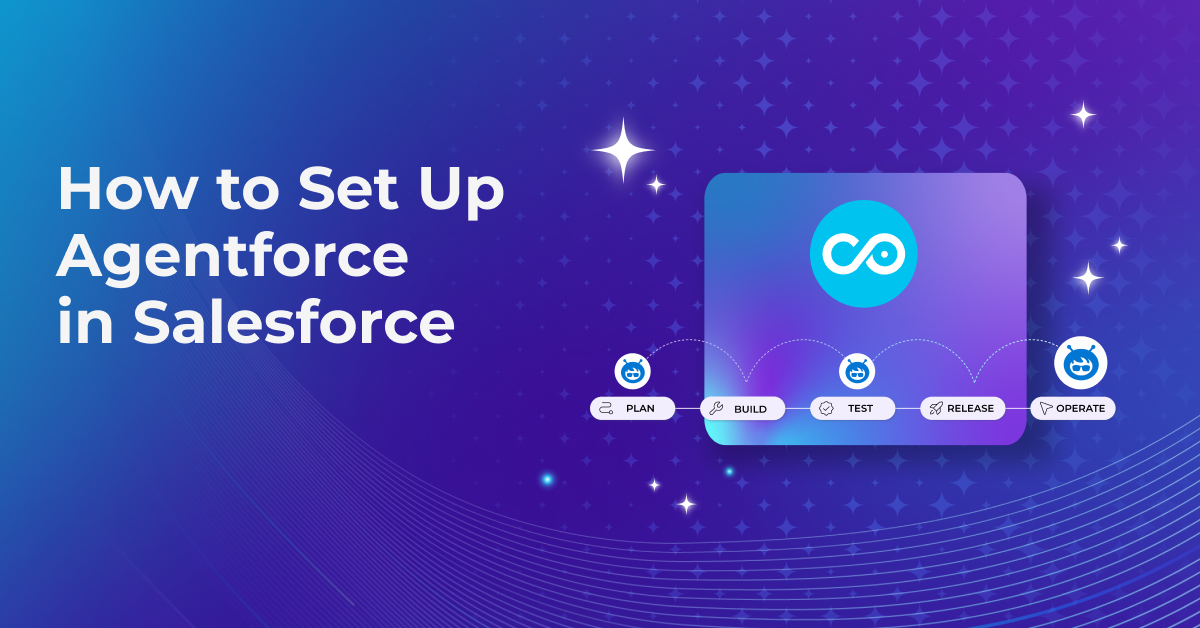
How to Set Up Agentforce in Salesforce 

When teams first ask, “What is Agentforce Salesforce?,†the answer usually sounds exciting: It’s AI-powered automation for smarter service experiences and faster case resolution. But then comes the real question—how do we actually set it up the right way? The promise is big, but the configuration can feel like standing at the edge of a very technical maze.

Yet with the right preparation, a structured setup, and a deployment strategy built for control, getting started with Agentforce doesn’t have to be overwhelming. In fact, it can become one of the most powerful accelerators in your Salesforce ecosystem.

Understanding Agentforce Prerequisites

The biggest mistakes in Salesforce initiatives happen before configuration even begins. Teams jump in without reviewing licensing, org structure, or technical dependencies, so make sure you’ve got the prerequisites covered first.

Start with the essentials

Agentforce solutions don’t operate in isolation. They work within your Salesforce ecosystem, and that ecosystem must be ready to support it. To successfully configure and use Agentforce, review:

  • Licensing requirements – Ensure the correct Salesforce editions and add-ons are enabled.
  • Feature dependencies – Confirm required platform features (Service Cloud capabilities, automation tools, AI components).
  • Org readiness – Evaluate metadata complexity, existing automations, and integration landscape.
  • Security model alignment – Make sure your role hierarchy and sharing model support intended use cases.

The hidden complexity most teams miss

Many orgs are still operating in legacy structures. If you’re transitioning from older development models, this is also the time to evaluate Salesforce source format vs metadata format.

How your org manages metadata impacts how smoothly Agentforce changes can be deployed and tracked. Metadata chaos creates release-day stress, while clean source management creates clarity. This leads to fewer surprises later on.

Preparing Your Salesforce Environment

If prerequisites are the blueprint, environment preparation lays the foundation. The Agentforce Builder touches permissions, data access, automation, and integrations. That means your environment must be structured intentionally, not reactively.

Review permissions and roles

Over-permissioning creates risk. Under-permissioning creates bottlenecks. You’re aiming for a balance of speed with control. So, ask yourself:

  • Who needs access?
  • Who should configure?
  • Who should only consume?
  • How do we enforce least-privilege principles?

Once you’ve got these sorted out, it’s time to apply them.

Validate data access and quality

Agentforce runs on data. If your data is messy, incomplete, or inconsistently structured, automation will amplify the problem instead of solving it. This is where clarity matters, and in practice, that translates to:

  • Standardizing objects
  • Cleaning duplicate records
  • Reviewing field-level security
  • Validating API access

Generative AI and automation are force multipliers. They multiply good systems—and bad ones. Make sure your system falls under the right category.

Plan your sandbox strategy

Never configure directly in production. A smart sandbox strategy includes:

  • A dedicated configuration sandbox
  • A full-copy sandbox for performance validation
  • Clear migration pathways between environments

This is also where DevOps maturity starts to matter. Structured environments reduce risk before deployment even begins. When you prepare intentionally, you avoid errors while building confidence.

Core Configuration Steps

You’ve assessed readiness and prepared your environment. Now it’s time to actually bring Agentforce to life inside your org. And if you’re deep in the weeds figuring out how to set up Agentforce in Salesforce, this is the stage where clarity matters most.

Enabling Features and Permissions

Start by activating required features in Setup. This typically includes:

  • AI-driven functionality tied to Agentforce
  • Service and automation capabilities
  • API access and integration settings

Then, move to permission sets. Here are some best practices:

  • Use permission sets instead of hard-coded profile edits
  • Create role-based access layers
  • Test each role in isolation before expanding access

This keeps your org secure and scalable. The goal isn’t just activation, but also alignment. Every permission should connect to a business outcome.

Configuring Workflows and Automations

Agentforce thrives on automation, but here’s the catch: Automation without governance becomes technical debt. It’s crucial to clearly define:

  • Trigger conditions
  • Business rules
  • Escalation logic
  • Notification paths
  • Exception handling

Think of automation like dominoes. If one falls incorrectly, the ripple effect can reach far beyond the original configuration. Test for:

  • Conflicting flows
  • Recursive triggers
  • Duplicate logic across tools
  • Performance impact

Keep it simple, build incrementally, and validate constantly. When done well, automation becomes invisible, and it just works. That’s the goal.

Connecting Integrations and APIs

Agentforce rarely operates alone. It often connects with external systems such as CRMs, service platforms, communication tools, and analytics engines. Integration setup requires:

  • Validated API endpoints
  • Authentication configuration
  • Secure credential management
  • Error-handling logic
  • Monitoring mechanisms
  • Connectivity testing

It also helps to simulate:

  • Data failures
  • API timeouts
  • Partial responses
  • Volume spikes

Because integrations don’t fail during calm days. They fail during peak moments. It’s best to be prepared and build resilience.

Testing and Validating Your Setup

You’re almost ready for deployment. This is where disciplined teams separate themselves from reactive ones. The focus should be on building certainty.

Sandbox validation

In your testing environment:

  • Simulate real user journeys
  • Validate edge cases
  • Confirm automation sequences
  • Stress-test integrations
  • Evaluate performance impact

Don’t just test happy paths. Test friction.

Error handling and observability

Here are important questions to know the answer to::

  • What happens when automation fails?
  • Where do errors surface?
  • Who gets notified?
  • How quickly can issues be resolved?

This is where structured DevOps becomes essential. Without visibility, issues hide, and hidden issues surface at the worst possible time during production. It’s important to keep in mind that confidence doesn’t come from hope. It comes from validation.

Deploying Agentforce with Confidence Using 91ºÚÁÏÍø

Setting up Agentforce is only half the story. The real risk lives in deployment. Momentum turns into stress with manual changers, inconsistent environment, missing dependencies, and version confusion. This is why 91ºÚÁÏÍø exists.

Name the pain

One misaligned metadata component can cause cascading failures. And if your org is still debating Salesforce source format vs metadata format, inconsistent source management will only compound the issue.

Traditional Salesforce deployments often rely on:

  • Change sets
  • Manual migration
  • Spreadsheet tracking
  • Last-minute validation
  • Limited rollback options

But when introducing AI-driven features like Agentforce, complexity increases. You’re not just moving fields and layouts, you’re also deploying automation, integrations, permissions, and potentially AI configurations.

Offer the solution

91ºÚÁÏÍø brings structure to what’s typically chaotic. As the only 100% Salesforce-native DevOps platform, 91ºÚÁÏÍø works where you work: inside Salesforce. It unifies planning, version control, testing, compliance, and deployment in one intelligent system.

When deploying Agentforce, 91ºÚÁÏÍø enables:

  • Automated CI/CD pipelines built specifically for Salesforce
  • Source-driven deployments for cleaner version control
  • Environment comparison tools to eliminate surprises
  • Automated testing to validate functionality before release
  • Governance and audit trails for compliance and visibility
  • Rollback strategies that don’t require panic mode

Highlight the win

Instead of wondering whether deployment will break something, you gain:

  • Confident, predictable releases
  • Clear visibility across environments
  • Fewer post-release bugs

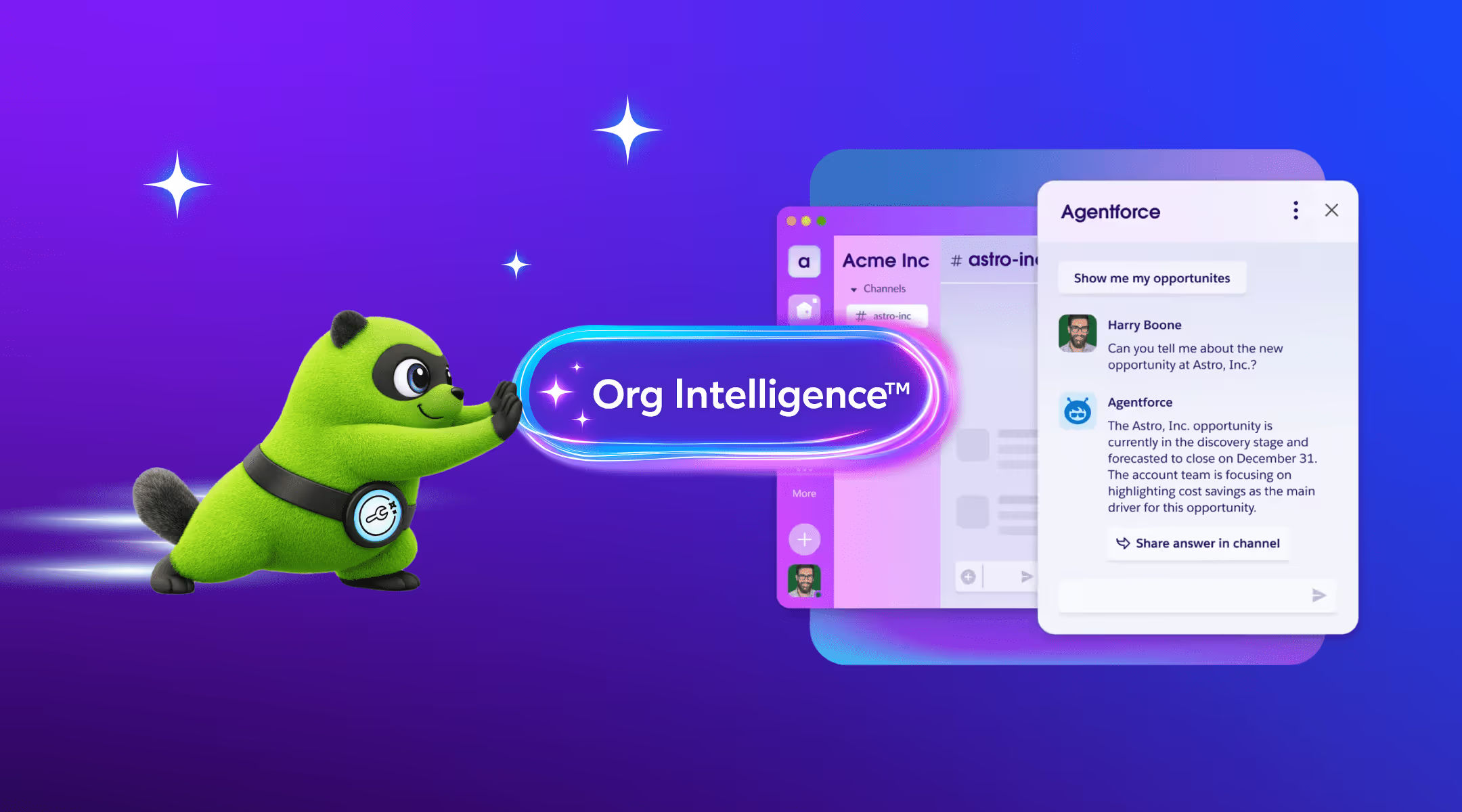
And when Agentforce becomes part of your broader AI strategy, 91ºÚÁÏ꿉۪s AI DevOps capabilities—including Org Intelligence™—learn from your metadata and delivery patterns. That means risk prediction improves over time.

91ºÚÁÏ꿉۪s dedicated support for Agentforce is purpose-built to streamline these deployments. Meanwhile, 91ºÚÁÏ꿉۪s AI platform demonstrates how intelligent automation removes friction across the lifecycle. Armed with these tools, deploying innovation doesn’t feel risky. It feels empowering.

Ongoing Optimization and Monitoring

Once Agentforce is live, the real work begins: optimizing performance, refining automation, and adapting to business change.

Monitor performance and adoption

Agentforce is powerful, but even powerful tools require tuning. After production deployment:

  • Track case resolution times.
  • Review automation execution logs.
  • Monitor API call limits.
  • Analyze user adoption metrics.
  • Identify friction points.

Think of it like a high-performance engine. It runs best when monitored and adjusted regularly.

Refine automation safely

Without structured DevOps, each adjustment risks destabilizing what’s already working. With 91ºÚÁÏÍø:

  • Every change is version-controlled
  • Testing is automated
  • Impact analysis is visible
  • Risk is predicted before release

That’s how you continue moving fast without losing stability.

Manage change intentionally

AI-driven automation impacts how people work. Make sure to provide the following for your team:

  • Clear training
  • Phased rollouts
  • Feedback loops
  • Ongoing enablement

Empowered users are the real multiplier. 91ºÚÁÏÍø simply amplifies your capability to lead change confidently.

From Setup to Success, Launch Agentforce the Right Way with 91ºÚÁÏÍø

If at first you came here asking what Agentforce Salesforce is, now you know it’s more than a feature. It’s an opportunity to reimagine how service, automation, and AI work together inside your org.

If you searched how to set up Agentforce in Salesforce, you’ve seen that setup requires technical readiness, structured environment, controlled configuration, rigorous testing, and intentional deployment.

The difference between a stressful rollout and a confident one isn’t just configuration skill. There’s a discipline to follow. Without structured DevOps, even well-configured systems can create chaos.
With 91ºÚÁÏÍø, complexity becomes manageable. Releases become predictable, and innovation moves faster without sacrificing governance or trust.

Agentforce can transform your Salesforce ecosystem. 91ºÚÁÏÍø ensures you deliver it with confidence, clarity, and control.

Sources

  1. ERMA. Legacy Systems: The Achilles Heel of Digital Transformation. .
  2. ITPro. Multi-cloud ‘over-permissioning’ causing cyber risk headaches for businesses. .
Book a demo

About The Author

Salesforce Source Format vs Metadata Format
Get Started with Agentforce in Salesforce
What Is Agentforce Salesforce?
91ºÚÁÏÍø Introduces ´¡²µ±ð²Ô³Ù¾±²¹â„¢, Bringing Context-Aware AI Agents to Salesforce DevOps
DevOps Pipeline Best Practices
DevSecOps vs. DevOps
DevOps vs. Agile
Generative AI in DevOps
How DevOps Teams Use AI to Win
Using AI in DevOps
Agentic AI in DevOps: Automation Solutions for Teams
91ºÚÁÏÍø Awarded on CarahSoft’s GSA Schedule, Expanding Access for Federal Agencies
Salesforce Agentforce AI Capabilities and Solutions
Salesforce AI Agent Software Features for DevOps Teams
91ºÚÁÏÍø Renews FedRAMP Authorization and Advances Toward IL5 to Support U.S. Military Organizations
91ºÚÁÏÍø Appoints Rajit Joseph as Chief Product Officer to Accelerate AI-Driven Customer Success and Product Innovation
91ºÚÁÏÍø Recognized in Salesforce 2025 Partner Innovation Awards
91ºÚÁÏÍø Appoints Gaurav Kheterpal as Chief Evangelist to Accelerate Global DevOps Community Growth
91ºÚÁÏÍø CI/CD & Robotic Testing Now TX-RAMP Certified for Texas Government
Org Intelligence: Why Context Matters So Much in Salesforce DevOps Tools
Hubbl Technologies and 91ºÚÁÏÍø Forge Strategic Alliance to Power AI-Driven DevOps with Deep SaaS Context
From Chaos to Control: Why Public Sector Teams Are Moving Beyond Manual Pipelines
91ºÚÁÏÍø Hosts India's Flagship DevOps Conference in Response to Overwhelming Demand
What Does “Org Intelligence†Really Mean for Salesforce Teams?
91ºÚÁÏÍø Launches Org Intelligence to Provide End-to-End Visibility into Salesforce Environments
Why Pipeline Visibility Is Key to Successful Salesforce DevOps Transformation
91ºÚÁÏÍø Robotic Testing Now in AWS Marketplace, AI-Powered Salesforce Test Automation at Scale
Navigating User Acceptance Testing on Salesforce: Challenges, Best Practices and Strategy
Navigating Salesforce Data Cloud: DevOps Challenges and Solutions for Salesforce Developers
Chapter 8: Salesforce Testing Strategy
Beyond the Agentforce Testing Center
How to Deploy Agentforce: A Step-by-Step Guide
How AI Agents Are Transforming Salesforce Revenue Cloud
The Hidden Costs of Building Your Own Salesforce DevOps Solution
Chapter 7 - Talk (Test) Data to Me
91ºÚÁÏÍø Announces DevOps Automation Agent on Salesforce AgentExchange
Deploying CPQ and Revenue Cloud: A DevOps Approach
91ºÚÁÏÍø Launches AI-Powered DevOps Agents on Slack Marketplace
Redefining the Future of DevOps: Salesforce’s Pioneering Ideas and Innovations
91ºÚÁÏÍø Announces DevOps Support for Salesforce Data Cloud, Accelerating AI-Powered Agent Development
AI-Powered Releasing for Salesforce DevOps
Top 3 Pain Points in DevOps — And How 91ºÚÁÏÍø AI Platform Solves Them
91ºÚÁÏÍø AI Platform: A New Era of Salesforce DevOps
91ºÚÁÏÍø Expands Its Operations in Japan with SunBridge Partners
Chapter 6: Test Case Design
Article: Making DevOps Easier and Faster with AI
Chapter 5: Automated Testing
Reimagining Salesforce Development with 91ºÚÁÏÍø's AI-Powered Platform
Planning User Acceptance Testing (UAT): Tips and Tricks for a Smooth and Enjoyable UAT
What is DevOps for Business Applications
Testing End-to-End Salesforce Flows: Web and Mobile Applications
91ºÚÁÏÍø Integrates Powerful AI Solutions into Its Community as It Surpasses the 100,000 Member Milestone
How to get non-technical users onboard with Salesforce UAT testing
DevOps Excellence within Salesforce Ecosystem
Best Practices for AI in Salesforce Testing
6 testing metrics that’ll speed up your Salesforce release velocity (and how to track them)
Chapter 4: Manual Testing Overview
AI Driven Testing for Salesforce
Chapter 3: Testing Fun-damentals
AI-powered Planning for Salesforce Development
Salesforce Deployment: Avoid Common Pitfalls with AI-Powered Release Management
Exploring DevOps for Different Types of Salesforce Clouds
91ºÚÁÏÍø Launches Suite of AI Agents to Transform Business Application Delivery
What’s Special About Testing Salesforce? - Chapter 2
Why Test Salesforce? - Chapter 1
Continuous Integration for Salesforce Development
Comparing Top AI Testing Tools for Salesforce
Avoid Deployment Conflicts with 91ºÚÁÏ꿉۪s Selective Commit Feature: A New Way to Handle Overlapping Changes
From Learner to Leader: Journey to 91ºÚÁÏÍø Champion of the Year
The Future of Salesforce DevOps: Leveraging AI for Efficient Conflict Management
A Guide to Using AI for Salesforce Development Issues
How to Sync Salesforce Environments with Back Promotions
91ºÚÁÏÍø and Wipro Team Up to Transform Salesforce DevOps
DevOps Needs for Operations in China: Salesforce on Alibaba Cloud
What is Salesforce Deployment Automation? How to Use Salesforce Automation Tools
Maximizing 91ºÚÁÏÍø's Cooperation with Essential Salesforce Instruments
From Chaos to Clarity: Managing Salesforce Environment Merges and Consolidations
Future Trends in Salesforce DevOps: What Architects Need to Know
Enhancing Customer Service with 91ºÚÁÏÍøGPT Technology
What is Efficient Low Code Deployment?
91ºÚÁÏÍø Launches Test Copilot to Deliver AI-powered Rapid Test Creation
Cloud-Native Testing Automation: A Comprehensive Guide
A Guide to Effective Change Management in Salesforce for DevOps Teams
Building a Scalable Governance Framework for Sustainable Value
91ºÚÁÏÍø Launches 91ºÚÁÏÍø Explorer to Simplify and Streamline Testing on Salesforce
Exploring Top Cloud Automation Testing Tools
Master Salesforce DevOps with 91ºÚÁÏÍø Robotic Testing
Exploratory Testing vs. Automated Testing: Finding the Right Balance
A Guide to Salesforce Source Control | 91ºÚÁÏÍø
A Guide to DevOps Branching Strategies
Family Time vs. Mobile App Release Days: Can Test Automation Help Us Have Both?
How to Resolve Salesforce Merge Conflicts: A Guide
91ºÚÁÏÍø Expands Beta Access to 91ºÚÁÏÍøGPT for All Customers, Revolutionizing SaaS DevOps with AI
Is Mobile Test Automation Unnecessarily Hard? A Guide to Simplify Mobile Test Automation
From Silos to Streamlined Development: Tarun’s Tale of DevOps Success
Simplified Scaling: 10 Ways to Grow Your Salesforce Development Practice
What is Salesforce Incident Management?
What Is Automated Salesforce Testing? Choosing the Right Automation Tool for Salesforce
91ºÚÁÏÍø Appoints Seasoned Sales Executive Bob Grewal to Chief Revenue Officer
Business Benefits of DevOps: A Guide
Go back to resources
There is no previous posts
Go back to resources
There is no next posts

Explore more about

Agentforce
Articles
May 8, 2026
Salesforce Source Format vs Metadata Format
Articles
May 5, 2026
What Is Agentforce Salesforce?
Articles
April 14, 2026
91ºÚÁÏÍø Introduces ´¡²µ±ð²Ô³Ù¾±²¹â„¢, Bringing Context-Aware AI Agents to Salesforce DevOps
Articles
March 4, 2026
DevOps Pipeline Best Practices

Activate AI — Accelerate DevOps

Release Faster, Eliminate Risk, and Enjoy Your Work.
Try 91ºÚÁÏÍø Devops.

Resources

Explore our DevOps resource library. Level up your Salesforce DevOps skills today.

Upcoming Events & Webinars

E-Books and Whitepapers

Support and Documentation

Demo Library