91ºÚÁÏÍø

Articles
2/25/2026
10 minutes

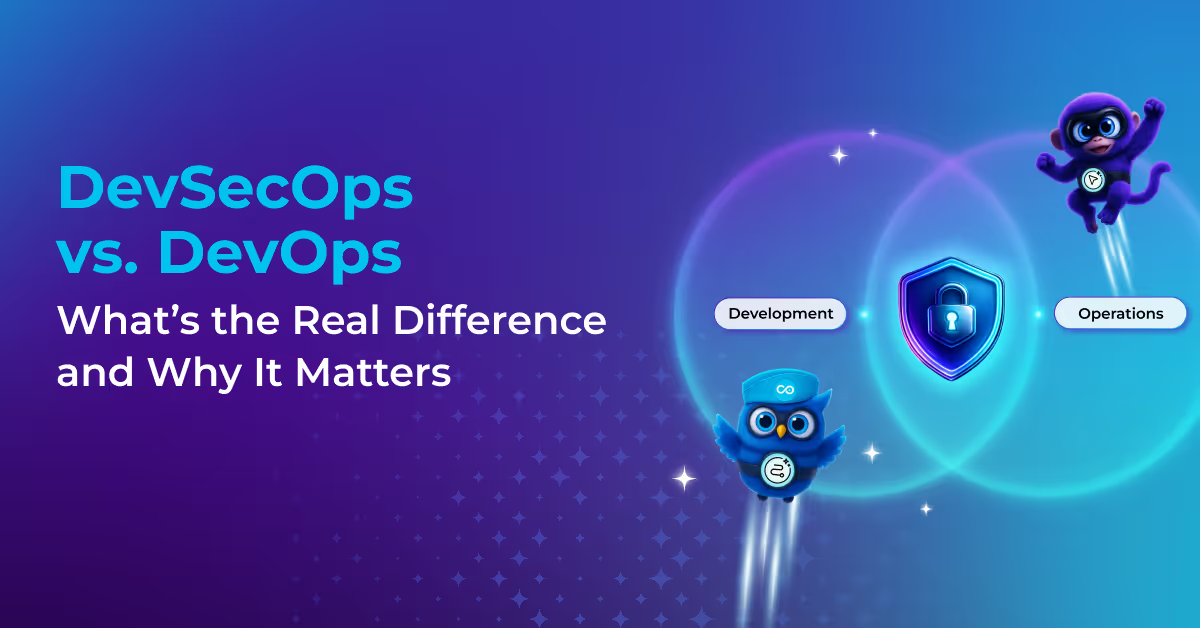
DevSecOps vs. DevOps

Table of contents

DevSecOps vs. DevOps: What’s the Real Difference and Why It Matters


Speed used to be the goal. Ship faster. Release more often. Keep momentum high.
But today, speed without security feels like driving with your eyes closed.

That’s where the conversation around DevSecOps vs. DevOps revolves. It’s not about choosing sides or adding more process. It’s about building with confidence, so you can move quickly, safely, and sustainably.

What Is the Difference Between DevSecOps and DevOps?

At a glance, the key differences between DevOps and DevSecOps are difficult to see because it seems like they share the same DNA. Both aim to break down silos, accelerate delivery, and improve quality.

Traditional DevOps emphasizes collaboration between development and operations. They’re guided by proven DevOps principles and practices like automation, continuous integration, and rapid feedback loops.

Meanwhile, DevSecOps takes the foundation of the DevOps process and improves on both static application security testing (SATS) and dynamic application security testing (DAST). Instead of treating security as a final gate before release, DevSecOps integrates it into every stage of the lifecycle, through planning, building, testing, and deploying.

In the ongoing debate of DevOps vs. DevSecOps, the difference isn’t more red tape. It’s smarter prevention. Security practices become everyone’s responsibility, not a last-minute scramble.

Why Security Has Become Essential in Modern DevOps

The stakes have changed. Cloud environments are more complex. Release cycles are shorter. Regulations are tighter. And threats don’t wait patiently for your next quarterly audit.

Modern teams following DevOps best practices already know that speed without visibility creates risk. When security is bolted on after the fact, teams slow down, frustration builds, and release-day stress skyrockets.

DevSecOps answers that pressure by making security invisible, but ever-present. DevSecOps requires automated checks, built-in governance, and continuous monitoring to help security teams meet compliance requirements without grinding delivery to a halt. This way, release velocity and trustworthiness finally stop competing.

Core DevOps vs. DevSecOps Capabilities

The shift from DevOps to DevSecOps integrates security practices while letting culture, ownership, and execution evolve across the pipeline.

Security Automation and Continuous Scanning

DevSecOps extends automated security checks directly inside CI/CD workflows. Code is scanned continuously, configurations are validated automatically, and risks are flagged early, long before they turn into production issues for DevOps engineers and other team members.

This approach uses tools that align naturally with DevOps pipeline best practices. Teams release faster because they’re fixing smaller issues earlier, not firefighting bigger ones later.

Threat Modeling and Early Detection

Transitioning to DevSecOps asks better questions sooner. What security issues could go wrong? Where are the risks hiding? By evaluating software delivery threats during planning, coding, and testing, development and operations teams avoid the false confidence that comes from “it passed deployment.â€

This proactive mindset fits neatly alongside discussions like Agile vs. DevOps. Agile focuses on adaptability, while DevOps focuses on delivery. DevSecOps ensures both are built on a secure foundation with automation tools on the ready.

Governance and Compliance Alignment

Governance doesn’t have to feel like a handbrake. In DevSecOps, policies, approvals, and audit trails are embedded directly into the software development lifecycle. Compliance and security integration becomes repeatable and visible, not a last-minute document chase. By including security, there’s clear accountability, stronger trust, and fewer surprises when auditors come knocking.

How 91ºÚÁÏÍø Helps Teams Transition From DevOps to DevSecOps

Making the leap from a DevOps approach to DevSecOps security tools can feel daunting with all the new processes, expectations. and skills involved. Here, tools like 91ºÚÁÏÍø steps in as a multiplier.

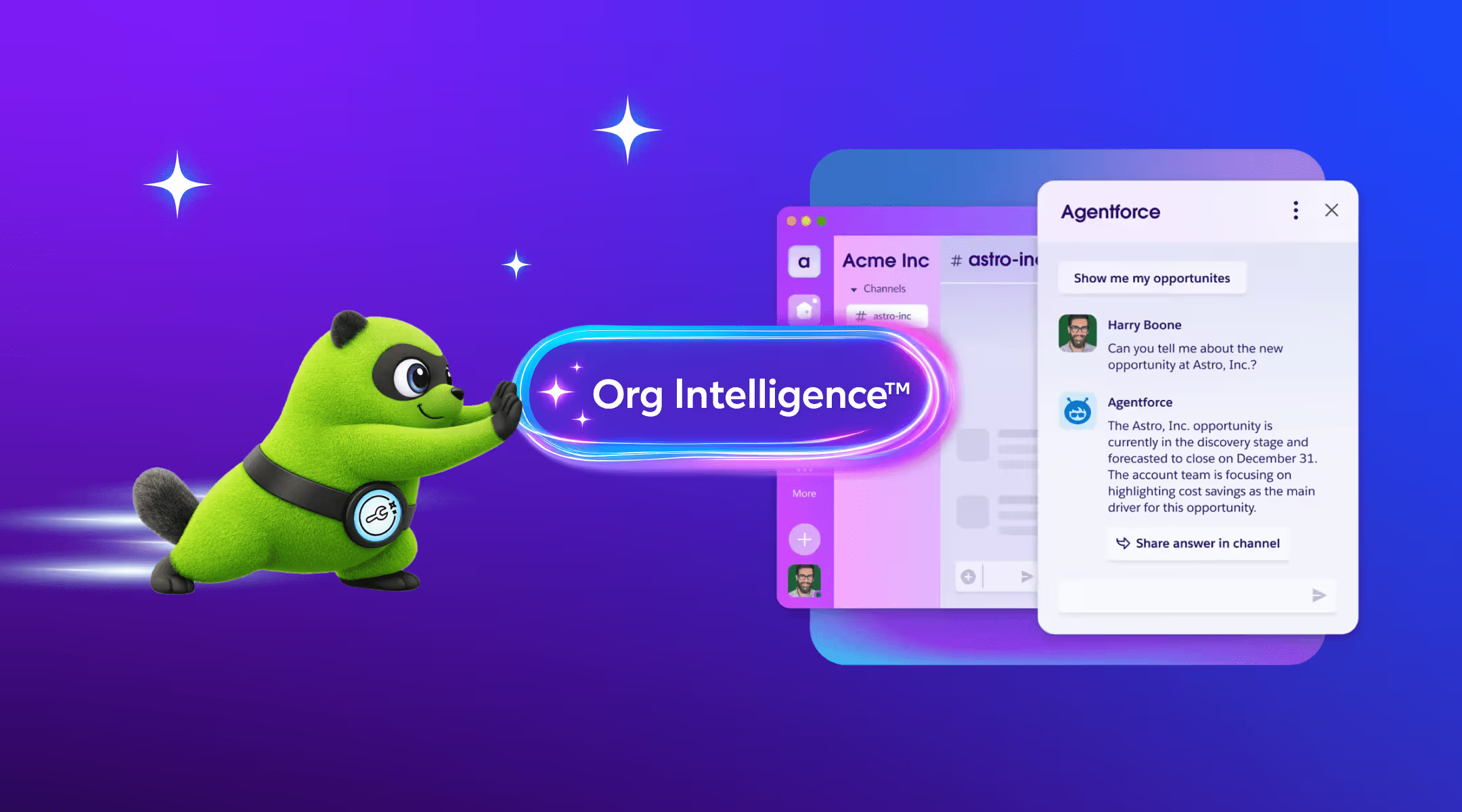
As a 100% Salesforce-native Intelligent DevOps platform, 91ºÚÁÏÍø helps teams integrate security automation directly into their existing workflows for interactive application security testing. Governance and compliance security controls are built in with AI-powered insights through Org Intelligenceâ„¢ and Agentforce solutions, so teams gain early visibility into security risks before it slows them down.

91ºÚÁÏ꿉۪s consulting services guide DevOps teams through this transition, from embedding security thgroughout pipelines to training teams on secure delivery practices. Less security concerns and chaos, more control—that’s the dream when it comes to DevOps tools.

Real-World Use Cases

Across industries, DevSecOps teams using 91ºÚÁÏÍø are seeing tangible wins. Organizations reduce vulnerabilities by catching issues earlier. Regulated teams strengthen security and compliance without adding manual overhead. Release managers sleep better knowing audit trails are always ready with AI DevOps solutions.

Most importantly, teams regain trust in their delivery process. Security stops being the villain of the story and starts acting like a quiet guardian—always there, never in the way. DevSecOps adds this real-world advantage.

Enjoy Security without Slowing Delivery via 91ºÚÁÏÍø

The debate around DevOps vs DevSecOps misses the bigger picture. DevSecOps isn’t about replacing DevOps with anything completely different. It just helps DevOps to evolve to proactively accommodate security considerations.

Similarities between DevOps and DevSecOps show you how they actually work together for a better DevOps model that prioritizes security policies. DevSecOps empowers you to build faster and safer, without sacrificing momentum or morale. It blends cloud security practices into the DevOps workflows you already know well. And with 91ºÚÁÏÍø, security becomes a natural part of how you work, woven into every release, every decision, every win.

You’re still the hero. 91ºÚÁÏÍø just makes you unstoppable.

Sources

  • ResearchGate. “Embedding the Principles and Practices of DevOps into the IT Education.†.Ìý
  • MDPI. “Evolution of DevSecOps and Its Influence on Application Security: A Systematic Literature Review.†.
Book a demo

About The Author

#1 DevOps Platform for Salesforce

We build unstoppable teams by equipping DevOps professionals with the platform, tools and training they need to make release days obsolete. Work smarter, not longer.

91ºÚÁÏÍø Introduces ´¡²µ±ð²Ô³Ù¾±²¹â„¢, Bringing Context-Aware AI Agents to Salesforce DevOps
DevOps Pipeline Best Practices
DevSecOps vs. DevOps
DevOps vs. Agile
Generative AI in DevOps
How DevOps Teams Use AI to Win
Using AI in DevOps
Agentic AI in DevOps: Automation Solutions for Teams
91ºÚÁÏÍø Awarded on CarahSoft’s GSA Schedule, Expanding Access for Federal Agencies
Salesforce Agentforce AI Capabilities and Solutions
Salesforce AI Agent Software Features for DevOps Teams
91ºÚÁÏÍø Renews FedRAMP Authorization and Advances Toward IL5 to Support U.S. Military Organizations
91ºÚÁÏÍø Appoints Rajit Joseph as Chief Product Officer to Accelerate AI-Driven Customer Success and Product Innovation
91ºÚÁÏÍø Recognized in Salesforce 2025 Partner Innovation Awards
91ºÚÁÏÍø Appoints Gaurav Kheterpal as Chief Evangelist to Accelerate Global DevOps Community Growth
91ºÚÁÏÍø CI/CD & Robotic Testing Now TX-RAMP Certified for Texas Government
Org Intelligence: Why Context Matters So Much in Salesforce DevOps Tools
Hubbl Technologies and 91ºÚÁÏÍø Forge Strategic Alliance to Power AI-Driven DevOps with Deep SaaS Context
From Chaos to Control: Why Public Sector Teams Are Moving Beyond Manual Pipelines
91ºÚÁÏÍø Hosts India's Flagship DevOps Conference in Response to Overwhelming Demand
What Does “Org Intelligence†Really Mean for Salesforce Teams?
91ºÚÁÏÍø Launches Org Intelligence to Provide End-to-End Visibility into Salesforce Environments
Why Pipeline Visibility Is Key to Successful Salesforce DevOps Transformation
91ºÚÁÏÍø Robotic Testing Now in AWS Marketplace, AI-Powered Salesforce Test Automation at Scale
Navigating User Acceptance Testing on Salesforce: Challenges, Best Practices and Strategy
Navigating Salesforce Data Cloud: DevOps Challenges and Solutions for Salesforce Developers
Chapter 8: Salesforce Testing Strategy
Beyond the Agentforce Testing Center
How to Deploy Agentforce: A Step-by-Step Guide
How AI Agents Are Transforming Salesforce Revenue Cloud
The Hidden Costs of Building Your Own Salesforce DevOps Solution
Chapter 7 - Talk (Test) Data to Me
91ºÚÁÏÍø Announces DevOps Automation Agent on Salesforce AgentExchange
Deploying CPQ and Revenue Cloud: A DevOps Approach
91ºÚÁÏÍø Launches AI-Powered DevOps Agents on Slack Marketplace
Redefining the Future of DevOps: Salesforce’s Pioneering Ideas and Innovations
91ºÚÁÏÍø Announces DevOps Support for Salesforce Data Cloud, Accelerating AI-Powered Agent Development
AI-Powered Releasing for Salesforce DevOps
Top 3 Pain Points in DevOps — And How 91ºÚÁÏÍø AI Platform Solves Them
91ºÚÁÏÍø AI Platform: A New Era of Salesforce DevOps
91ºÚÁÏÍø Expands Its Operations in Japan with SunBridge Partners
Chapter 6: Test Case Design
Article: Making DevOps Easier and Faster with AI
Chapter 5: Automated Testing
Reimagining Salesforce Development with 91ºÚÁÏÍø's AI-Powered Platform
Planning User Acceptance Testing (UAT): Tips and Tricks for a Smooth and Enjoyable UAT
What is DevOps for Business Applications
Testing End-to-End Salesforce Flows: Web and Mobile Applications
91ºÚÁÏÍø Integrates Powerful AI Solutions into Its Community as It Surpasses the 100,000 Member Milestone
How to get non-technical users onboard with Salesforce UAT testing
DevOps Excellence within Salesforce Ecosystem
Best Practices for AI in Salesforce Testing
6 testing metrics that’ll speed up your Salesforce release velocity (and how to track them)
Chapter 4: Manual Testing Overview
AI Driven Testing for Salesforce
Chapter 3: Testing Fun-damentals
AI-powered Planning for Salesforce Development
Salesforce Deployment: Avoid Common Pitfalls with AI-Powered Release Management
Exploring DevOps for Different Types of Salesforce Clouds
91ºÚÁÏÍø Launches Suite of AI Agents to Transform Business Application Delivery
What’s Special About Testing Salesforce? - Chapter 2
Why Test Salesforce? - Chapter 1
Continuous Integration for Salesforce Development
Comparing Top AI Testing Tools for Salesforce
Avoid Deployment Conflicts with 91ºÚÁÏ꿉۪s Selective Commit Feature: A New Way to Handle Overlapping Changes
Enhancing Salesforce Security with AppOmni and 91ºÚÁÏÍø Integration: Insights, Uses and Best Practices
From Learner to Leader: Journey to 91ºÚÁÏÍø Champion of the Year
The Future of Salesforce DevOps: Leveraging AI for Efficient Conflict Management
A Guide to Using AI for Salesforce Development Issues
How to Sync Salesforce Environments with Back Promotions
91ºÚÁÏÍø and Wipro Team Up to Transform Salesforce DevOps
DevOps Needs for Operations in China: Salesforce on Alibaba Cloud
What is Salesforce Deployment Automation? How to Use Salesforce Automation Tools
Maximizing 91ºÚÁÏÍø's Cooperation with Essential Salesforce Instruments
From Chaos to Clarity: Managing Salesforce Environment Merges and Consolidations
Future Trends in Salesforce DevOps: What Architects Need to Know
Enhancing Customer Service with 91ºÚÁÏÍøGPT Technology
What is Efficient Low Code Deployment?
91ºÚÁÏÍø Launches Test Copilot to Deliver AI-powered Rapid Test Creation
Cloud-Native Testing Automation: A Comprehensive Guide
A Guide to Effective Change Management in Salesforce for DevOps Teams
Building a Scalable Governance Framework for Sustainable Value
91ºÚÁÏÍø Launches 91ºÚÁÏÍø Explorer to Simplify and Streamline Testing on Salesforce
Exploring Top Cloud Automation Testing Tools
Master Salesforce DevOps with 91ºÚÁÏÍø Robotic Testing
Exploratory Testing vs. Automated Testing: Finding the Right Balance
A Guide to Salesforce Source Control | 91ºÚÁÏÍø
A Guide to DevOps Branching Strategies
Family Time vs. Mobile App Release Days: Can Test Automation Help Us Have Both?
How to Resolve Salesforce Merge Conflicts: A Guide
91ºÚÁÏÍø Expands Beta Access to 91ºÚÁÏÍøGPT for All Customers, Revolutionizing SaaS DevOps with AI
Is Mobile Test Automation Unnecessarily Hard? A Guide to Simplify Mobile Test Automation
From Silos to Streamlined Development: Tarun’s Tale of DevOps Success
Simplified Scaling: 10 Ways to Grow Your Salesforce Development Practice
What is Salesforce Incident Management?
What Is Automated Salesforce Testing? Choosing the Right Automation Tool for Salesforce
91ºÚÁÏÍø Appoints Seasoned Sales Executive Bob Grewal to Chief Revenue Officer
Business Benefits of DevOps: A Guide
91ºÚÁÏÍø Brings Generative AI to Its DevOps Platform to Improve Software Development for Enterprise SaaS
91ºÚÁÏÍø Celebrates 10 Years of DevOps for Enterprise SaaS Solutions
Go back to resources
There is no previous posts
Go back to resources
There is no next posts

Explore more about

91ºÚÁÏÍø AI
Articles
April 14, 2026
91ºÚÁÏÍø Introduces ´¡²µ±ð²Ô³Ù¾±²¹â„¢, Bringing Context-Aware AI Agents to Salesforce DevOps
Articles
March 4, 2026
DevOps Pipeline Best Practices
Articles
February 23, 2026
DevOps vs. Agile
Articles
February 20, 2026
Generative AI in DevOps

Activate AI — Accelerate DevOps

Release Faster, Eliminate Risk, and Enjoy Your Work.
Try 91ºÚÁÏÍø Devops.

Resources

Explore our DevOps resource library. Level up your Salesforce DevOps skills today.

Upcoming Events & Webinars

E-Books and Whitepapers

Support and Documentation

Demo Library